Last Updated: July 7, 2026, 8:20 p.m.

Walk into any bookstore near a CBSE school and you'll see the same five or six names stacked on the shelf — RD Sharma, RS Aggarwal, ML Aggarwal, Together With, Xam Idea. Parents grab whichever one the shopkeeper points at first, students end up with two books they never fully open, and by December, half the exercises are still untouched.
Picking the right class 9 maths reference book isn't about buying the thickest one on the shelf. It's about matching the book to what your child actually needs — stronger fundamentals, more practice, exam-pattern questions, or all three. This guide breaks down every major maths reference book for class 9, who it's actually built for, and how to use it without wasting a single chapter.
Note: Books mentioned in this blog are suggested by our tutors teaching CBSE/ICSE Class 9–10 Mathematics at Edudrona.
NCERT is where every CBSE student should start — it sets the syllabus, and board papers are framed directly from its concepts. But NCERT deliberately keeps question count low so students can focus on understanding, not volume. That's fine for building concepts. It's not enough for:
That gap is exactly what a good reference book fills. The trick is choosing one (or two, at most) that matches your goal instead of collecting all of them.
Also Read: Reference Book for Class 9 Science
The books in this list are suggested by our Class 9-10 mathematics tutors. It is cross-checked against the current CBSE Class 9 syllabus (2026-26) and feedback from students who have used these books over the last three academic sessions. We looked at four things: syllabus alignment, difficulty progression, solved-example quality, and how well each book supports self-study without a tutor sitting alongside.
The book most CBSE students end up with sooner or later, and for good reason. RD Sharma has enormous depth — chapter theory is thorough, and the sheer number of solved examples before each exercise means a student rarely hits a problem type they haven't already seen worked out.
Best for: Students who are already comfortable with basics and want to push into harder problems, including early competitive-exam prep (JEE Foundation, Olympiads).
Strengths
Watch-outs
Where to Buy: R D Sharma Mathematics Class 9 with MCQ in Mathematics
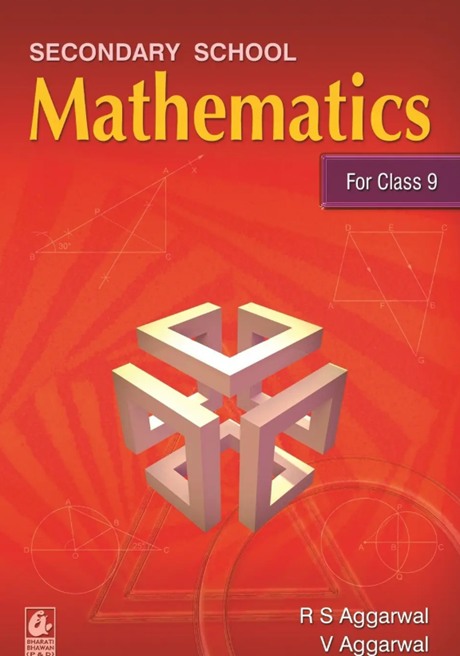
The go-to book for students who want broad syllabus coverage without RD Sharma's intensity. Explanations are shorter and more direct, and the difficulty curve inside each chapter is gentler.
Best for: Students who want to cover the full syllabus efficiently and build exam confidence rather than chase the hardest possible questions.
Strengths
Watch-outs
Where to Buy: R.S. Aggarwal Senior Secondary School Mathematics For Class 9th
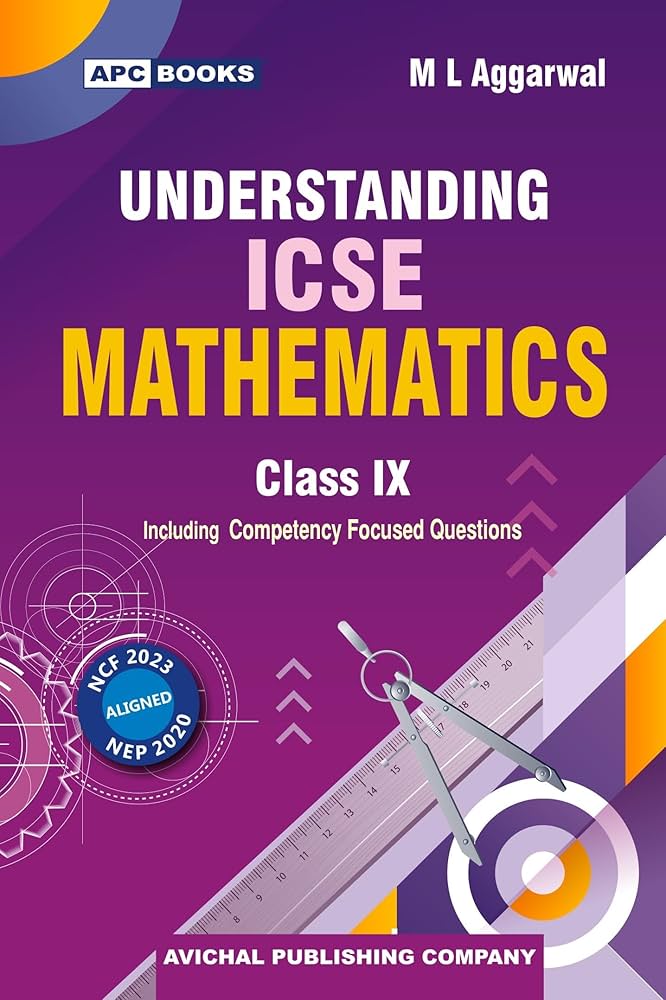
If your child is on the ICSE board rather than CBSE, this is usually the first name that comes up, and it's built specifically around the ICSE syllabus structure rather than adapted from a CBSE title.
Best for: ICSE students specifically — the chapter sequencing and question style match ICSE board exams more closely than CBSE-first books.
Strengths
Watch-outs
Where to Buy: ML Aggarwal | APC Understanding ICSE Mathematics for Class 9
These are less "reference books" and more structured revision-and-practice companions. They're built around chapter-wise self-assessment, competency-based questions (in line with NCF-SE 2023), and full sample papers.
Best for: Final revision, mock tests, and getting used to the exact format of school and board question papers.
Strengths
Watch-outs
Where to Buy: Xam idea Mathematics Book Class 9
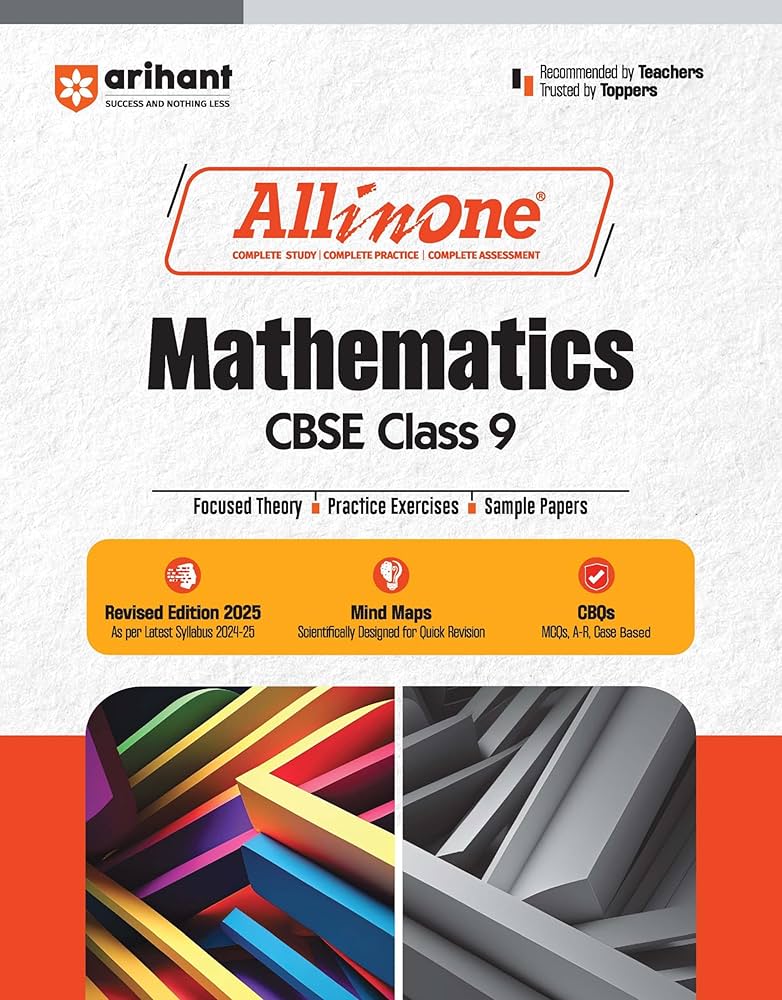
A newer entrant that's gained traction because it combines theory, practice exercises, and competency-based questions (CBQs) in a single book, aligned with the updated NCERT/NCF-SE structure.
Best for: Students who want one consolidated book covering theory + practice + exam-format questions, instead of juggling three separate titles.
Strengths
Watch-outs
Where to Buy: NCERT Solutions Mathematics Class 9th with chapterwise study notes | English Medium
| Book | Board | Best For | Difficulty | Ideal Use |
|---|---|---|---|---|
| NCERT | CBSE | Concept foundation | Low–Medium | Primary textbook |
| RD Sharma | CBSE | Depth & competitive prep | High | Secondary, after NCERT |
| RS Aggarwal | CBSE | Full syllabus practice | Medium | Secondary or standalone |
| ML Aggarwal | ICSE | ICSE-specific practice | Medium–High | Primary reference (ICSE) |
| Together With / Xam Idea | CBSE | Revision & mock tests | Medium | Final revision |
| Arihant All in One | CBSE | Consolidated study | Medium | Single-book alternative |
There's no single "best" answer — it depends on where the student is starting from:
One reference book, used properly from April to December, will outperform three reference books opened only in February.
Not for everyone. It's genuinely useful if a student wants deeper practice or is eyeing competitive exams later. If the goal is simply scoring well in school and board-pattern exams, RS Aggarwal or NCERT plus a revision guide is often enough.
For concept clarity, yes — CBSE papers are set directly from NCERT. But most students benefit from at least one additional book for extra practice, since NCERT's question count per topic is intentionally limited.
RD Sharma has more depth and harder problems; RS Aggarwal has a gentler difficulty curve and covers the syllabus efficiently. Students who are already confident with basics tend to prefer RD Sharma; students still building confidence usually find RS Aggarwal easier to work through.
ML Aggarwal's "Understanding Mathematics for Class 9" is built specifically for the ICSE syllabus and is the most commonly recommended title for that board.
It helps. Together With and Xam Idea are structured around self-assessment and sample papers, which is different from what a concept-and-practice book like RD Sharma or RS Aggarwal is built for.