Last Updated: July 7, 2026, 6:03 p.m.
If you've typed "best reference book for class 12 chemistry" into Google at 11 PM with a half-finished chapter on Electrochemistry staring back at you, you're not alone. Every bookstore shelf and every senior's WhatsApp group has a different opinion, and most of them contradict each other.
So here's the deal. This isn't a copy-paste list of ten books nobody actually reads cover to cover. This is a shortlist of the chemistry reference books for class 12 that genuinely earn their price tag — broken down by which part of the syllabus they help with, who should buy them, and who should skip them.
Note:These are the top chemistry reference books for class 12 suggested by our highly experienced Chemistry tutors at Edudrona.
If you only remember one line from this article: NCERT is non-negotiable, and no single reference book covers Physical, Organic, and Inorganic Chemistry equally well — the strongest students usually mix one conceptual book with one numerical-practice book and one MCQ/question-bank book.
| Need | Recommended Book |
|---|---|
| Board exam concept clarity | NCERT Chemistry Part 1 & 2 |
| Deep, chapter-wise theory | Pradeep's New Course Chemistry (Vol 1 & 2) |
| Inorganic Chemistry depth | J.D. Lee's Concise Inorganic Chemistry |
| Numerical problem-solving | P. Bahadur's Physical Chemistry |
| MCQs for boards + CUET + NEET/JEE | MTG Objective NCERT at Your Fingertips |
| Quick last-minute revision | Modern's ABC of Chemistry (Part 1 & 2) |
Let's go deeper into why each one made the list — and where each one falls short.
Before jumping to the list, it helps to be honest about something most articles skip: Class 12 Chemistry has three very different personalities — Physical, Organic, and Inorganic — and they don't respond to the same kind of book.
Physical Chemistry rewards numerical practice. Organic Chemistry rewards pattern recognition and mechanism-based reasoning. Inorganic Chemistry rewards memory anchored to logic (periodic trends, not rote lists). A book that's brilliant for Physical Chemistry numericals can be genuinely weak for Inorganic. That's the single biggest reason "best reference book for class 12 chemistry" doesn't have one universal answer — and it's also why toppers rarely rely on just one book.
Also Read: Best Reference Books for Class 12
With that out of the way, here's what to actually keep on your desk this year.
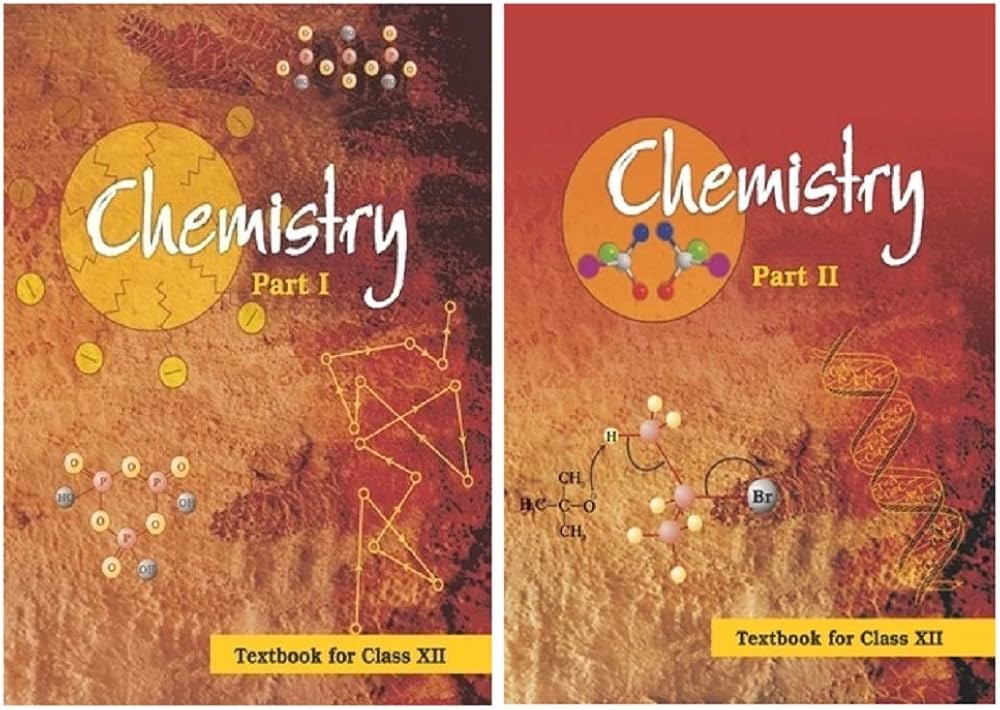
Best for: Board exam foundation, direct syllabus alignment
Every CBSE topper you've ever heard of will tell you the same thing: NCERT is not optional. CBSE question papers are set directly from NCERT language, and a large chunk of board marks come from NCERT in-text and exemplar-style questions asked almost verbatim.
Strengths
Where it falls short
Verdict: Read this first, always. Every reference book on this list is meant to supplement NCERT, not replace it.
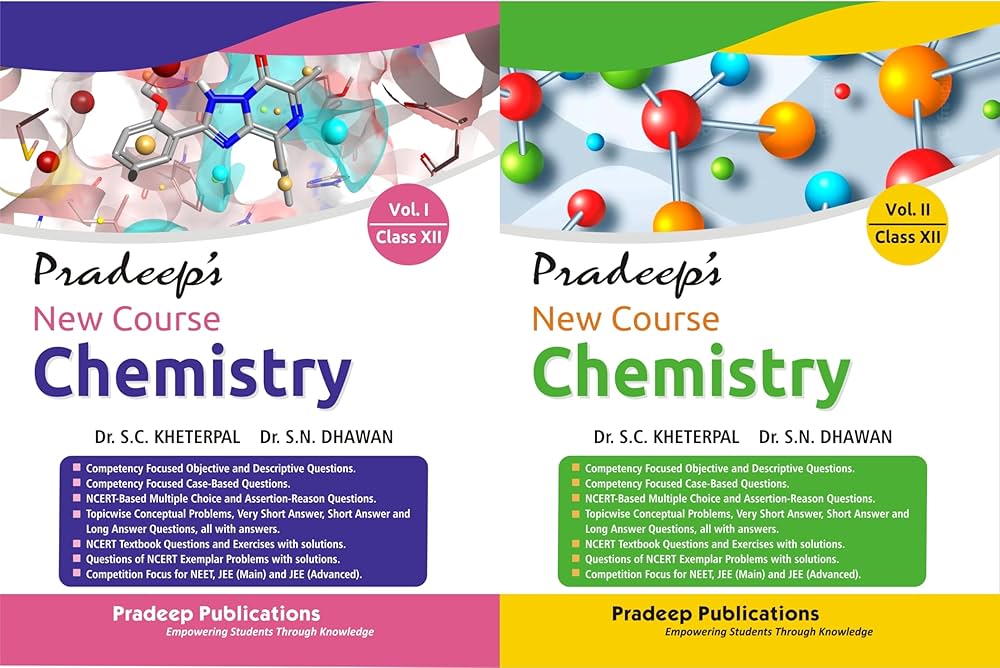
Best for: Students who want detailed theory without buying five separate books
Pradeep's has been a fixture on Indian science shelves for decades, and it's still one of the most complete single-series options for Class 12 Chemistry. It's split into two volumes and genuinely covers Physical, Organic, and Inorganic Chemistry chapter by chapter with worked examples.
Strengths
Where it falls short
Verdict: A strong "one book that does most of the job" option, especially for students who like thorough explanations over quick bullet points.
Best for: Understanding why inorganic reactions happen, not just memorising them
Inorganic Chemistry is the chapter students complain about most, mainly because most books present it as a list to memorise. J.D. Lee is different — it explains inorganic trends through logic, periodicity, and bonding, which makes the content stick instead of evaporating a week before the exam.
Strengths
Where it falls short
Verdict: If Inorganic Chemistry (Coordination Compounds, d- and f-Block Elements) is your weak spot, this is worth the extra book on your desk.
Best for: Numerical practice in Electrochemistry, Chemical Kinetics, and Solutions
Physical Chemistry in Class 12 is scoring, but only if you've solved enough varied numericals to not freeze on a slightly twisted question. NCERT simply doesn't give you enough volume here, which is where P. Bahadur comes in.
Strengths
Where it falls short
Verdict: Add this specifically for numerical chapters — you don't need to solve the whole book, just the relevant chapters.
Best for: Objective-type practice as boards move toward more MCQs, plus CUET and NEET/JEE crossover prep
With CBSE increasing the weightage of MCQs and case-based questions in recent years, and CUET becoming a real factor for university admissions, a pure MCQ resource matters more than it used to. This book pulls objective questions directly from NCERT lines, chapter by chapter.
Strengths
Where it falls short
Verdict: Excellent as a companion book for revision weeks, not as a primary study resource.
Best for: Students revisiting concepts close to the exam
Modern ABC covers the full syllabus with a slightly more compressed structure than Pradeep's, plus question banks pulled from previous years' board and competitive papers.
Strengths
Where it falls short
Verdict: A solid revision-phase book rather than a first-read textbook.
Also Read: Physics Reference Books for Class 12
Buying five reference books and reading none of them properly is worse than buying one and finishing it. Here's a sequence that tends to work:
| Weak Area | Book to Reach For |
|---|---|
| Solutions, Electrochemistry, Chemical Kinetics (numericals) | P. Bahadur's Physical Chemistry |
| Coordination Compounds, d- and f-Block Elements | J.D. Lee's Concise Inorganic Chemistry |
| Haloalkanes, Alcohols, Aldehydes/Ketones (mechanisms) | Pradeep's New Course Chemistry |
| Overall MCQ speed and CUET-style questions | MTG Objective NCERT at Your Fingertips |
| Last two weeks before boards | NCERT + your own revision notes |
For a decent, safe score, NCERT alone can get most students through — CBSE draws heavily from it. But if you're aiming for a 90+ or you're also prepping for CUET, JEE, or NEET, NCERT alone won't give you enough numerical variety or objective practice.
Pradeep's New Course Chemistry is the closest thing to an all-in-one option, since it covers Physical, Organic, and Inorganic Chemistry with real depth in a single series.
Books like J.D. Lee, P. Bahadur, and MTG's Objective series are commonly used by JEE and NEET aspirants as well, so there's real overlap — you're not buying separate stacks for boards versus entrance exams.
Not necessarily separate books, but you likely need separate strengths covered — most single books are stronger in one or two of the three branches, which is why this list mixes and matches rather than picking one "winner."