Last Updated: July 12, 2026, 7:20 p.m.

Class 8 is where science stops being "read the chapter, answer the questions" and starts asking students to actually apply what they've learned — a friction question isn't answered by memorising a definition anymore, it wants a real explanation. That shift is exactly where the right textbook stops being enough on its own.
Ask five parents which science reference book for class 8 to buy and you'll get five different answers, mostly based on whatever the local bookstore had in stock. This guide skips the guesswork.
hWe've compared the books that actually show up on CBSE and ICSE recommendation lists — what each one does well, who it suits, and where it falls short — so you're not buying three books to do the job of one.
NCERT's new Class 8 Science textbook, Curiosity, is well-written and covers the syllabus CBSE actually tests from — nothing in a board or school exam should surprise a student who's genuinely worked through it. But like every NCERT book, it keeps question volume light so the focus stays on understanding rather than repetition. That's a strength for building concepts and a real limitation when it comes to:
A good science reference book for class 8 fills exactly that gap — but only if it's the right one for what the student actually needs.
Reviewed by an Edudrona Science faculty member — M.Sc. Physics, B.Ed., with 9+ years teaching CBSE and ICSE Class 8 Science — checked against the current CBSE syllabus (NCERT Curiosity textbook, 2025-26) and ICSE's prescribed Selina Concise series.
We looked at four things per book: syllabus alignment, explanation clarity, question variety, and how usable it is for a student studying without a tutor next to them.
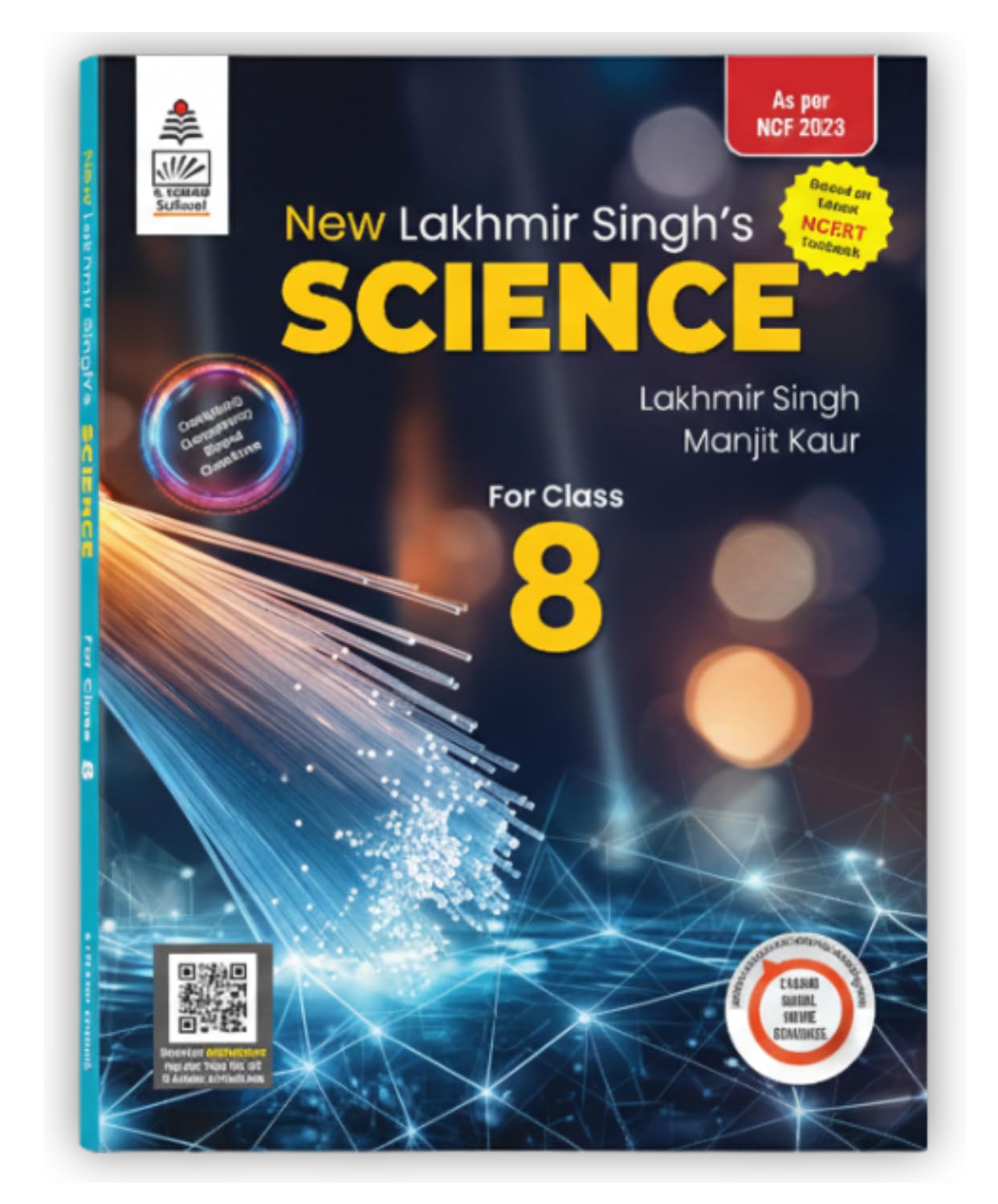
The name that comes up most often when CBSE teachers and students are asked directly. It's not a workbook — it's closer to a second textbook, with clear explanations that go a level deeper than NCERT without turning dense.
Best for: Students who want stronger conceptual clarity, not just more questions to solve.
Strengths
Watch-outs
Where to buy: Lakhmir Singh & Manjit Kaur — Science for Class 8
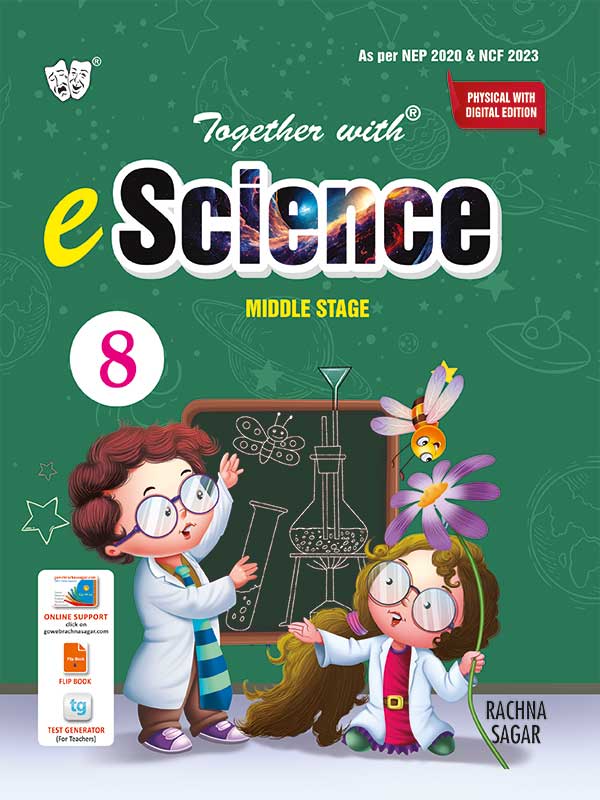
A guide built specifically around practice and exam pattern rather than re-teaching concepts. It assumes NCERT or a book like Lakhmir Singh has already done the explaining.
Best for: Students who understand the concepts and need structured practice — MCQs, short answers, HOTS — matched to the school exam format.
Strengths
Watch-outs
Where to buy: Together With Science — Rachna Sagar
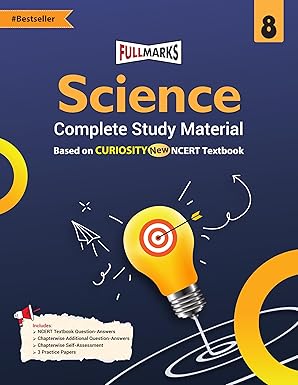 Full Marks Science Curiosity Class 8
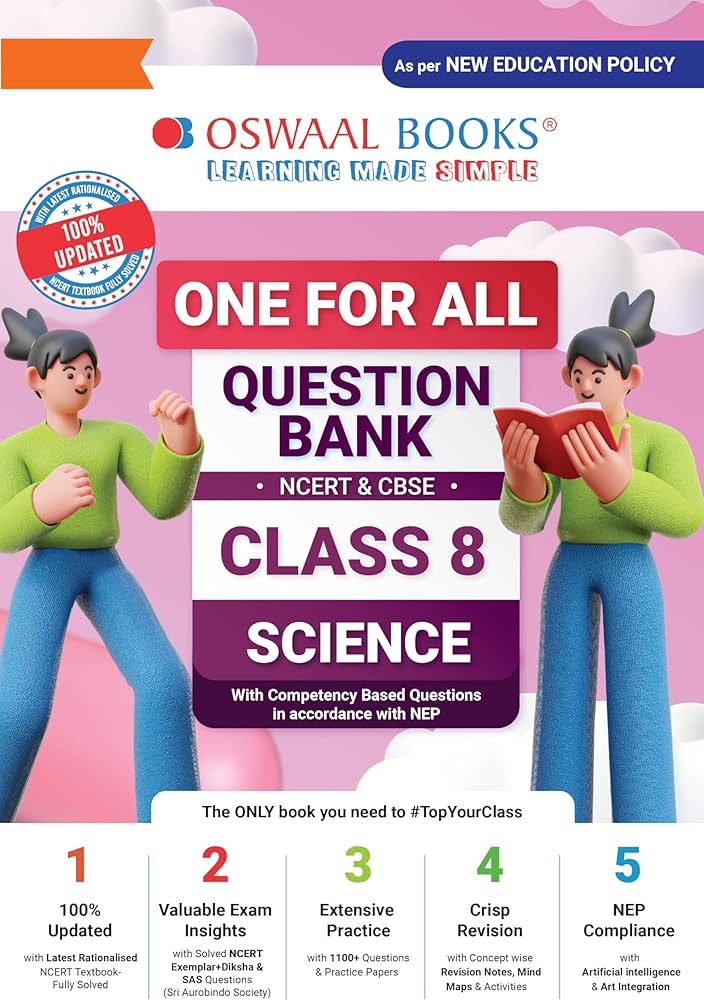
These "all-in-one" formats bundle theory, NCERT solutions, MCQs, and sample papers into a single book, built around the newer NCF-SE 2023 competency-based framework CBSE has been shifting toward.
Best for: Students who want one consolidated book instead of juggling a concept book and a separate practice guide.
Strengths
Watch-outs
Where to buy: Full Marks Science Curiosity Class 8
For ICSE students, this isn't optional the way CBSE reference books are — Selina's Concise series is the prescribed textbook the ICSE curriculum is built around, split into three separate books rather than one combined science title.
Best for: ICSE students specifically. CBSE-oriented books won't match ICSE's chapter sequencing or its heavier application-based question style.
Strengths
Watch-outs
Where to buy: Selina Middle School Physics, Chemistry and Biology Class 8
| Book | Board | Best For | Depth | Ideal Use |
|---|---|---|---|---|
| NCERT (Curiosity) | CBSE | Concept foundation | Medium | Primary textbook |
| Lakhmir Singh & Manjit Kaur | CBSE | Deeper concept clarity | High | Secondary, after NCERT |
| Together With | CBSE | Exam-pattern practice | Medium | Alongside NCERT |
| Full Marks Guide | CBSE | Quick revision | Low–Medium | Final revision |
| Oswaal / Arihant All-in-One | CBSE | Consolidated study | Medium | Single-book alternative |
| Selina Concise (Physics/Chem/Bio) | ICSE | ICSE-specific depth | High | Primary reference (ICSE) |
It depends on the gap you're trying to close, not on which book has the thickest spine:
One well-used book beats three that only get opened the week before an exam.
NCERT covers what's tested, but its limited question count means most students benefit from at least one additional book for extra practice or deeper explanation — especially before unit tests, which often go beyond NCERT's own examples.
They serve different purposes. Lakhmir Singh explains concepts in more depth than NCERT; Together With focuses on exam-pattern practice once the concept is already clear. Many students use both — one for learning, one for practice.
Selina's Concise series (Physics, Chemistry, Biology) is the prescribed reference for ICSE and the one most schools recommend directly, since it matches ICSE's syllabus and question style far more closely than any CBSE-oriented book.
For ICSE, yes — Selina publishes them as three distinct titles. For CBSE, most reference books (Lakhmir Singh, Together With, Full Marks) cover all three as one combined "Science" book, matching how NCERT structures the subject.
Curiosity is NCERT's revised Class 8 Science textbook aligned with NCF-SE 2023, with more emphasis on competency-based and application questions rather than pure recall.